Maximum Lifting Speed of Vacuum Tube Lifters
July 2, 2026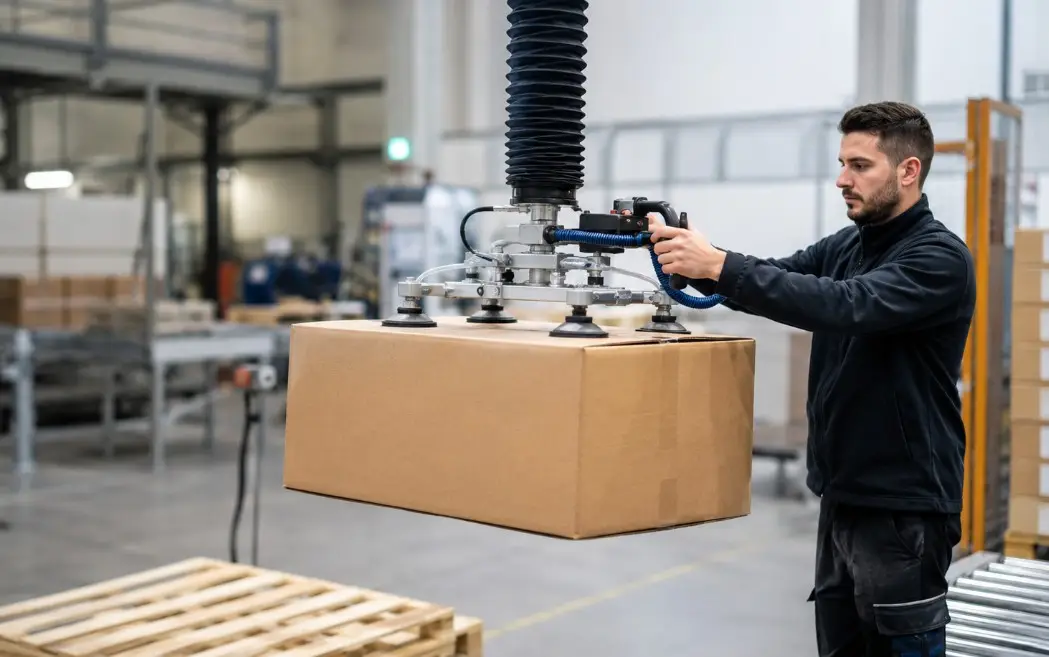
Choosing a vacuum lifter for your load should start with the product you need to handle – not with a lifter model, lifting capacity or suction cup catalogue.
A cardboard box, plastic bag, metal panel and sealed container can have similar weights but require completely different gripping solutions. Surface porosity, product geometry, available gripping area, movement direction and handling frequency can all influence how the complete vacuum lifting system should be configured.
This is why the right vacuum tube lifter is rarely just a question of “How many kilograms do you need to lift?” A reliable solution starts by understanding the load, selecting an appropriate suction cup or gripping head and then matching the rest of the system to the real handling process.
If you are already evaluating a vacuum lifter for your load, this article will show you which information matters before requesting a quotation – and why sending a few basic application details can make it much easier to identify the right lifting concept.
Need help with a specific application? Send us the load type, weight, dimensions and a few photos of the product.
Request a Tailored Lifting Solution
Why a Vacuum Lifter for Your Load Must Be Application-Specific
Industrial lifting applications can look similar from a distance. An operator picks up a product, moves it and places it at another workstation, pallet or conveyor. But the details of that movement determine whether a vacuum lifting system will work reliably.
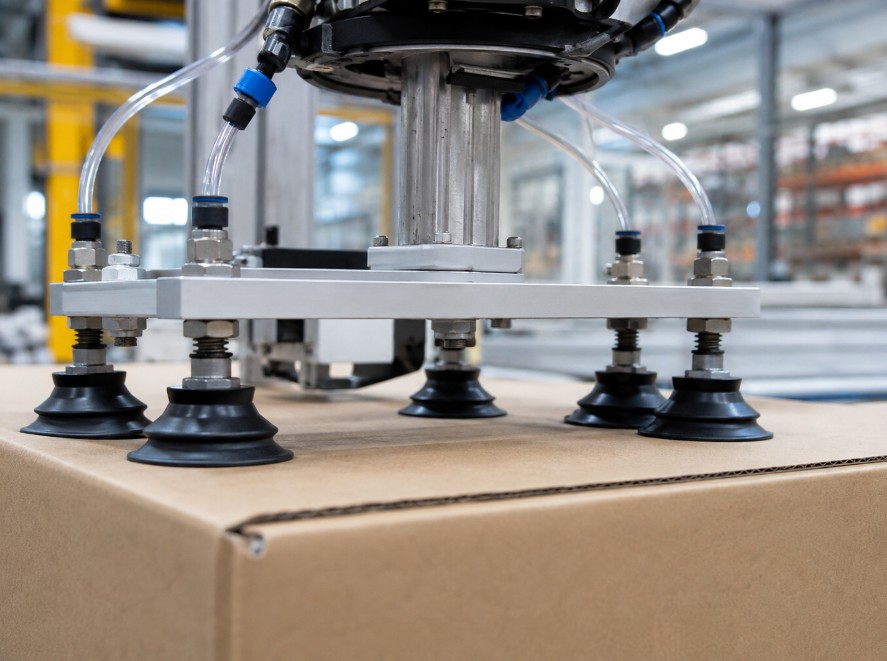
Consider three products weighing approximately the same amount:
- a rigid metal sheet with a smooth surface;
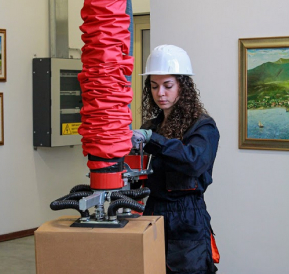
- a corrugated cardboard carton;
- a flexible paper or plastic sack.
The lifting requirement may appear identical when judged only by weight. From a vacuum-handling perspective, however, these are three different applications.
The metal sheet may provide a stable, non-porous gripping surface. The cardboard carton can introduce air leakage, seams and flexible flaps. The sack may deform as soon as vacuum is applied.
Choosing a vacuum lifter for your load therefore requires more than selecting sufficient lifting capacity. The suction interface between the lifter and the product has to work consistently throughout the complete handling cycle.
The Suction Cup Is Where the Vacuum Lifter Meets Your Product
The suction cup or gripping head is the physical connection between the vacuum lifting system and the load. If that interface is unsuitable, increasing lifting capacity elsewhere in the system does not automatically create reliable gripping.
The suction cup must be able to establish useful contact with the product while accommodating its surface characteristics and geometry. It should also support stable handling when the operator accelerates, moves, turns or positions the load.
For a technical explanation of how to evaluate surface condition, porosity, suction cup geometry, usable contact area and load deformation, see our dedicated Wiki guide:
Suction Cup Selection for Vacuum Lifters: 8 Steps to Choose the Right Cup
The Wiki article explains the engineering side of suction cup selection in detail. This blog article focuses on the next commercial question: how do you turn those technical requirements into the right vacuum lifting solution for your production or warehouse?
1. Start With the Surface of the Load
When selecting a vacuum lifter for your load, the surface is one of the first things to evaluate.
Smooth metal, glass or sealed plastic usually behaves differently from cardboard, rough wood, textile or flexible packaging. The important question is not simply what the product is made from, but what the suction cup will actually contact.
Useful information includes:
- whether the surface is smooth or rough;
- whether it is porous or relatively airtight;
- whether the product is rigid or flexible;
- whether there are seams, tape, labels or openings;
- whether the surface can be dusty, wet or oily;
- how much usable gripping area is available.
A photo of the actual pickup surface can often communicate more than a long product description.
Commercial tip: When requesting a vacuum lifting solution, do not send only the product weight. Include one or two photographs showing the area where the suction cup could make contact.
2. Porous Loads Need a Different Approach
Cardboard boxes, paper sacks, wood and similar materials can allow air to enter the vacuum system. This means the system may need to continuously compensate for leakage while the load is being handled.
For that reason, selecting a vacuum lifter for your load requires the suction cup, vacuum flow and complete lifting system to be considered together.
A cup that works perfectly on a smooth test plate may behave differently on the real carton. Even two cardboard boxes with similar dimensions can behave differently if their material, coating, seams or construction differ.
If your products are porous, read our technical Wiki article on handling porous loads with vacuum tube lifters and our guide to vacuum level vs vacuum flow.
3. One Suction Cup Does Not Fit Every Product
A common purchasing mistake is assuming that one generic suction cup should be able to handle every product within a production process.
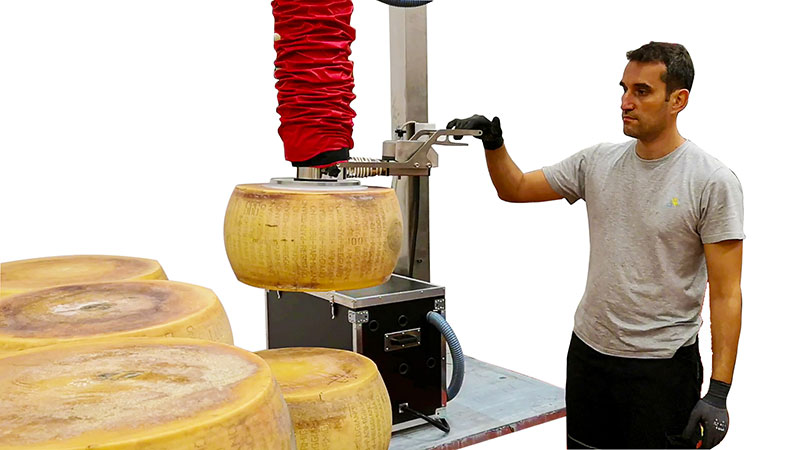
In reality, the suitable gripping configuration can depend on product width, shape, stiffness and the available pickup area.
A large flat panel may benefit from multiple suction points. A narrow product may require a different cup geometry. A flexible sack may need a more compliant gripping concept. A carton with seams across the top may require the suction points to be positioned away from the flap junction.
This does not necessarily mean that every product requires a completely separate machine. It means that the gripping requirements should be identified before the vacuum lifter for your load is specified.
For a deeper comparison of the available gripping principles, see our Suction Cup Selection Guide.
4. Weight Matters – But It Is Only Part of the Specification
Maximum load weight is essential information, but it should never be the only parameter used when requesting a vacuum lifter.
The supplier should also understand:
- minimum and maximum product dimensions;
- available gripping surface;
- lifting height;
- horizontal movement or required reach;
- pickup and release positions;
- handling frequency;
- available working space;
- production or warehouse environment.
The combination of these factors determines what the operator actually needs to do during every lifting cycle.
If you need the engineering background behind lifting capacity, suction area and safety considerations, see our guide to calculating vacuum lifter capacity.
5. Consider How Often the Operator Lifts the Load
A product that is moved twice per shift creates a very different handling requirement from a product that is repeatedly picked and positioned throughout the working day.
Handling frequency should therefore be included when selecting a vacuum lifter for your load.
Repetitive manual material handling can place physical demands on operators, particularly when the task includes lifting, reaching, twisting or handling bulky loads.
The UK Health and Safety Executive advises employers to consider suitable lifting and handling aids to reduce manual handling risks where appropriate. You can read its independent guidance on making the best use of lifting and handling aids.
For companies evaluating vacuum lifting, this means the business case is not limited to whether an operator is technically capable of lifting an individual product. The complete task – including repetition, movement, positioning and working posture – should be considered.
When Does a Vacuum Tube Lifter Make Commercial Sense?
A vacuum tube lifter can be worth evaluating when manual handling has become a bottleneck or when the company wants to improve the way repetitive lifting tasks are performed.
Typical situations include:
- operators repeatedly lifting boxes between a conveyor and pallet;
- bags or sacks being moved during production or packaging;
- panels being loaded, unloaded or positioned;
- products that are bulky or awkward to grip manually;
- frequent lifting between different working heights;
- applications where product handling needs to become more consistent;
- processes where one operator should be able to control lifting and positioning.
The key is not to start with the assumption that a certain model is required. Start with the handling problem and then configure a vacuum lifter for your load.
Not Sure Which Model You Need? You Do Not Have to Choose It Yourself
Companies sometimes postpone an inquiry because they do not know which vacuum tube lifter model, suction cup, vacuum pump or support structure they need.
You do not need to define the complete technical configuration before contacting us.
What we need first is information about your application.
- What are you lifting?
- How heavy is it?
- What are the minimum and maximum dimensions?
- What is the surface made from?
- Is it smooth, porous, flexible, dusty or uneven?
- Where is the product picked up?
- Where must it be placed?
- How often is the lift repeated?
With this information, it becomes much easier to evaluate the type of vacuum lifter for your load and determine which gripping concept should be considered.
From Suction Cup Selection to a Complete Lifting Solution
The suction cup is an important starting point, but a successful application depends on the complete system.
The final configuration may need to coordinate:
- the suction cup or gripping head;
- available suction area;
- vacuum generation;
- lifting tube requirements;
- control concept;
- required reach;
- support structure;
- workstation layout.
This is why buying a vacuum tube lifter purely from a specification table can overlook important details.
The better approach is to match the equipment to the real process. The goal is not simply to purchase a lifter. The goal is to create a vacuum lifter for your load, workstation and everyday handling requirements.
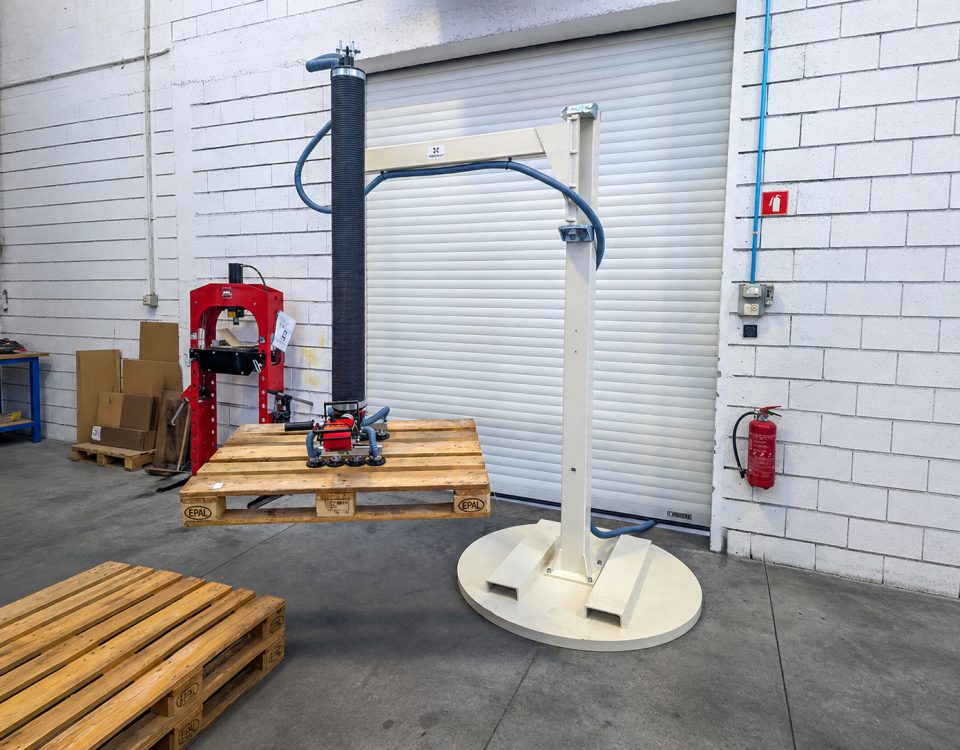
You can explore the available Tube Lifter range, but the final configuration should be based on your actual application.
What Should You Send When Requesting a Vacuum Lifter Recommendation?
You can make the first technical evaluation easier by preparing a simple application brief.
1. Load information
- product type;
- minimum and maximum weight;
- minimum and maximum dimensions;
- surface material;
- surface condition;
- photos of the actual product.
2. Handling process
- pickup position;
- release position;
- lifting height;
- required movement direction;
- approximate working area;
- handling frequency.
3. Working environment
- production, warehouse or logistics area;
- available space;
- special hygiene requirements;
- dust, moisture or other relevant conditions;
- existing support structure, if applicable.
You do not need a complete engineering specification before making contact. A short description, dimensions and several photos are enough to start a conversation about the appropriate vacuum lifter for your load.
Do You Need a Standard Product or a Tailored Configuration?
The answer depends on the application.
If the load provides a predictable gripping surface, dimensions remain consistent and the handling process is straightforward, selecting the system can be relatively simple.
If products vary significantly, the surface is porous, the packaging is flexible, the pickup area is limited or the load must be positioned in a specific way, the gripping concept requires more attention.
This is where the connection between the technical Wiki and commercial consultation becomes useful.
Use our Suction Cup Selection for Vacuum Lifters guide to understand the technical factors. Then send us your real application data so the complete lifting concept can be evaluated.
Choosing a Vacuum Lifter Is Easier When You Start With the Right Questions
The most useful question is not simply, “Which tube lifter should we buy?”
Start with:
- What product needs to be lifted?
- What surface will the suction cup contact?
- Is the material porous or airtight?
- Is the product rigid or flexible?
- How heavy and how large is it?
- How frequently is it handled?
- How far and in which direction must it move?
These answers provide the basis for selecting a vacuum lifter for your load instead of trying to adapt the load to a generic lifting solution afterwards.
Ready to Find the Right Vacuum Lifter for Your Load?
You do not need to know the correct tube diameter, suction cup geometry or vacuum configuration before contacting us.
Tell us what you need to lift.
Send the maximum weight, dimensions, surface material, handling frequency and a few photos of the actual product. Based on the application, our team can help evaluate a suitable tube lifter and gripping concept.
If the surface or suction cup requirement is unclear, you can first review our technical suction cup selection guide.
When you are ready to discuss your application:
Request a Tailored Lifting Solution
Contact Adria Manipulators today for a custom lifting evaluation.
Or explore our vacuum tube lifter range before sending your inquiry.
FAQ: Choosing a Vacuum Lifter for Your Load
How do I choose the right vacuum lifter for my load?
Start with the actual load. Define its maximum weight, dimensions, surface material, porosity, available gripping area and the required movement. These details help determine the suction cup, lifting system and support configuration.
What information is needed for a vacuum lifter quotation?
Provide the load type, maximum weight, minimum and maximum dimensions, surface condition, lifting height, working area, handling frequency and several photos of the actual product.
Does the suction cup affect which vacuum lifter I need?
Yes. The suction cup is the interface between the lifting system and the product. Surface porosity, geometry and usable gripping area can influence the gripping concept and the requirements of the complete vacuum system.
Can one vacuum lifter handle different products?
Potentially, but this depends on how much the products vary in weight, dimensions, surface and geometry. The application should be evaluated before assuming that one suction configuration can reliably handle every load.
Can vacuum lifters handle cardboard boxes and porous materials?
Yes, depending on the packaging and system configuration. Porous materials allow air leakage, so suction cup design and available vacuum flow become particularly important.
Do I need to know which Tube Lifter model I need before requesting a quote?
No. Start by describing the application. Load weight, dimensions, surface, working area and handling frequency provide the information needed for an initial evaluation of the lifting concept.
Why should the actual product be tested?
Real products can differ in surface texture, porosity, packaging construction and stiffness. Testing representative loads helps verify that the proposed gripping concept works under realistic handling conditions.
Ready to Find the Right Vacuum Lifter for Your Load?
Tell us what you need to lift. Send us the maximum weight, dimensions, surface material, handling frequency and a few photos of the product. Our team can use these details to evaluate a suitable vacuum lifting and suction cup concept for your application.
Request a Tailored Lifting Solution
Contact Adria Manipulators today for a custom lifting evaluation.