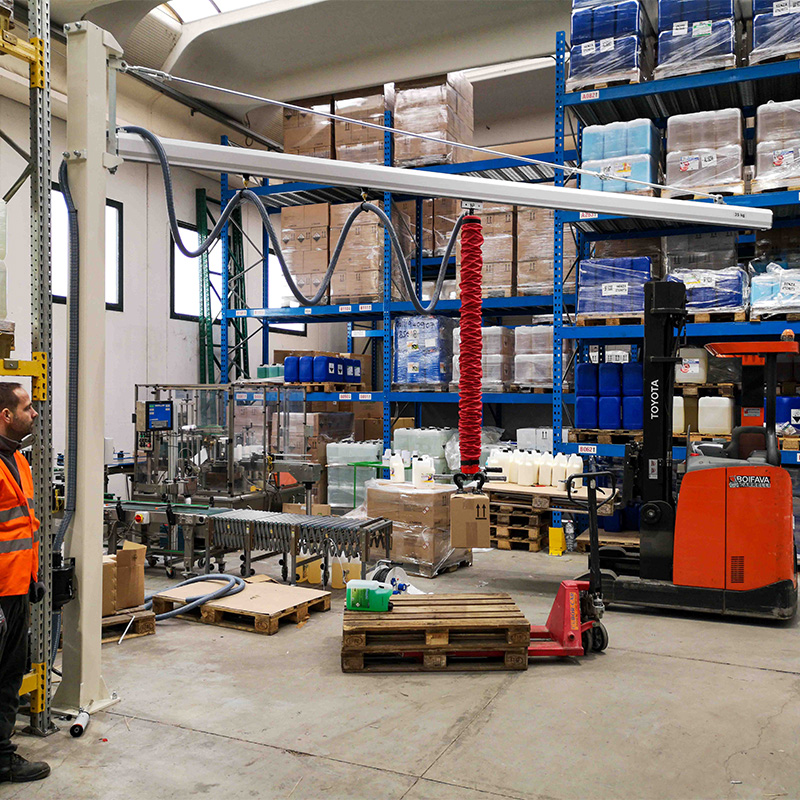
How to Choose the Right Vacuum Tube Lifter for Your Production Line
November 17, 2025
Vacuum Tube Lifter ROI in 2026: Industrial Lifting Safety & Ergonomics
January 8, 2026
Last updated: December 2025
CE-Certified Vacuum Tube Lifters: What EU Manufacturers Need to Know
The Complete 2025 Guide to Safety, Compliance & Productivity in Modern Production Environments
European manufacturers are under constant pressure to improve productivity, prevent manual-handling injuries, and stay compliant with strict EU machinery requirements. Among the most effective lifting technologies, CE certified vacuum tube lifters have become a reliable solution for repetitive, high-frequency material handling in logistics, packaging, food processing, furniture production, and many other industrial environments.
Yet many production managers, engineers, and HSE specialists still ask:
- What exactly does CE marking guarantee for vacuum lifting equipment?
- Why do some tube lifters carry a CE mark while others do not?
- How does CE compliance affect safety audits, insurance, and legal responsibility?
- How do you choose the right CE-compliant tube lifter for your application and environment?
This guide answers those questions with practical, EU-focused clarity—so you can select the right system with confidence.
Table of Contents
1) What Is CE Certification — and Why Does It Matter?
CE (Conformité Européenne) marking is a manufacturer’s declaration that a machine complies with applicable EU safety, health, and environmental requirements. In practice, CE marking means the manufacturer has performed a risk assessment, applied essential safety requirements, prepared technical documentation, and issued a Declaration of Conformity—so the equipment can be legally placed on the market and used across EU countries.
For production facilities, CE marking is not a “sticker”—it directly impacts:
- Worker safety and ergonomics
- Audit readiness during inspections
- Insurance acceptance and reduced claim risk
- Employer liability in case of incidents
- Long-term reliability through standardized safety design
Bottom line: choosing CE certified vacuum tube lifters reduces compliance risk while improving daily operations.
2) EU Machinery Framework: Directive Today, Regulation Tomorrow
Traditionally, lifting equipment compliance has been aligned with the EU Machinery Directive 2006/42/EC. However, the EU has adopted the Machinery Regulation (EU) 2023/1230, which will apply from 20 January 2027 and will replace the Directive framework for machinery placed on the EU market.
What this means for manufacturers and safety managers:
- Short term: ensure current machinery and lifting devices are CE compliant and fully documented.
- Mid term (pre-2027): ensure suppliers are preparing documentation and design approaches aligned with the new Regulation.
- Practical takeaway: a strong CE documentation package and robust risk assessment process are becoming even more critical.
You can read the official EU overview here: EU Machinery framework (official).
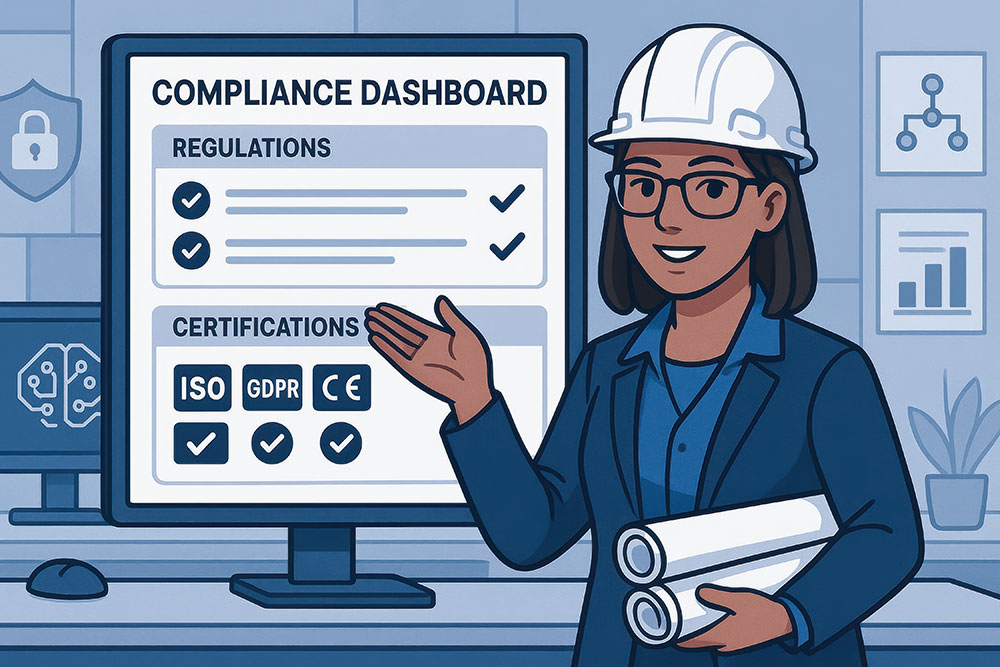
3) What Does CE Certification Require for Vacuum Tube Lifters?
Vacuum tube lifters are lifting devices—so CE compliance must address safety, ergonomics, control behavior, mechanical integrity, and documentation. In day-to-day reality, CE-compliant tube lifters should be engineered to reduce risk for both the operator and the load.
a) Ergonomics & Manual Handling Risk Reduction
CE-aligned lifting solutions help reduce musculoskeletal disorder risk by minimizing force, awkward postures, and repetitive strain. This is especially relevant in environments where operators perform hundreds (or even thousands) of lifts per shift.
b) Safety of the Vacuum System
- Stable load holding and clear operating behavior
- Controlled lowering / safe response in abnormal conditions
- Vacuum level visibility and predictable release control
- Correct selection of suction cups, seals, and vacuum generation sizing
c) Mechanical Structure & Stability
- Durable lifting tube and reinforced mounting points
- Secure joints, swivels, and handling arms
- Protection against uncontrolled motion and preventable drops
d) Control Logic & Operator Protection
- Intuitive controls and predictable behavior
- Protection against accidental activation
- Smooth movement and stable handling during lift and release
e) Maintenance, Traceability & Documentation
A strong CE package typically includes a maintenance manual, spare parts traceability, inspection guidance, risk assessment documentation, and a Declaration of Conformity. During audits, this documentation is often as important as the equipment itself.
4) Legal Responsibility of EU Manufacturers (and Site Operators)
A common misconception is that responsibility lies only with the equipment supplier. In reality, the employer/site operator is responsible for ensuring machinery used on site is compliant, correctly installed, and used according to documentation.
If an incident occurs and the equipment is:
- not CE marked (when required),
- missing a valid Declaration of Conformity,
- modified without proper documentation,
- or used outside the defined application limits,
the business may face fines, insurance disputes, operational shutdown risk, legal consequences, and reputational damage.
Practical takeaway: CE-compliant lifting equipment is not just a procurement checkbox—it is legal and operational protection.
5) Key EU Standards Applicable to Vacuum Tube Lifters
The following standards are commonly relevant (depending on configuration, environment, and integration):
- EU Machinery Directive 2006/42/EC (and transition planning toward Machinery Regulation (EU) 2023/1230)
- EN 13155 – Non-fixed load-lifting attachments
- EN ISO 12100 – Risk assessment and risk reduction
- EN 1005 – Ergonomics of manual handling
- EN 60204 – Electrical equipment of machines (where applicable)
- Food-grade / hygienic requirements (for stainless-steel / washdown environments)
Tip: when comparing suppliers, ask for a clear documentation set (manuals, risk assessment, DoC) and confirm what standards are referenced in the technical file.
6) Why CE-Certified Tube Lifters Matter for HSE & Safety Managers
HSE teams increasingly prioritize injury prevention, ergonomics, and documented compliance. Tube lifters support these goals by:
- Reducing back injuries and WMSDs from repetitive lifting of 5–25 kg loads
- Lowering fatigue and supporting consistent performance across shifts
- Improving predictability of handling movements and releases
- Shortening training time via intuitive one-hand controls
- Streamlining audits with standardized documentation
7) Productivity Benefits: Why Compliance Also Increases Efficiency
CE compliance is primarily about safety—but the same engineering discipline often improves throughput:
- Faster cycles with less operator strain and repositioning
- Reduced downtime through tested components and stable system sizing
- Higher consistency across the entire shift (less fatigue-related slowdown)
- Better load stability for fragile or porous materials
If you want a practical overview of tube lifters and how they work in industrial environments, see: Why choose vacuum lifters.
8) Industries That Benefit Most from CE-Certified Vacuum Tube Lifters
- Logistics & Warehousing: boxes, parcels, e-commerce picking, palletizing
- Packaging Lines: cartons, bags, trays, foils
- Food Processing (stainless-steel options): hygienic handling, washdown-ready requirements
- Furniture & Wood: MDF, laminated boards, panels
- Automotive & Components: repetitive part handling and loading tasks
- Construction Materials: tiles, insulation panels, porous boards
In short: if your operation involves repetitive manual lifts, a CE certified vacuum tube lifter can be a high-impact upgrade.
9) How to Choose the Right CE-Certified Vacuum Tube Lifter
Use this selection checklist to avoid mismatches and compliance headaches:
- Load weight: define max and typical weight (include safety margin)
- Load type: boxes, bags, panels, drums, trays, irregular shapes
- Surface porosity: porous loads require correct suction cup choice and vacuum sizing
- Working height & reach: confirm headroom and station geometry
- Environment: dusty, humid, cold storage, food-grade, cleanroom
- Lift frequency: high-frequency tasks need strong ergonomic focus and stable behavior
- Documentation package: manuals, risk assessment references, Declaration of Conformity
Want to compare models quickly? Start here: Tube Lifters overview.
10) Why Choose TubeLifters (Adria Manipulatorji) for CE-Certified Tube Lifters?
Many suppliers offer vacuum lifters, but not all provide the same level of engineering detail, documentation support, and application-specific customization. TubeLifters (Adria Manipulatorji) focuses on practical, production-ready solutions designed for EU operations.
Highlighted CE-Certified Tube Lifter Models
-
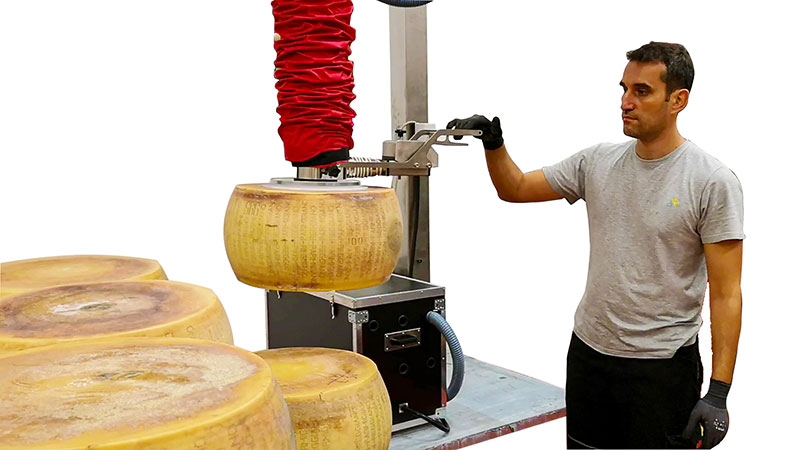
AG033 Tube Lifter – versatile solution for lifting up to 50 kg (ideal for boxes and bags).
View AG033 -
AG044 Tube Lifter – heavy-duty ergonomic handling up to 110 kg with extended reach.
View AG044 -
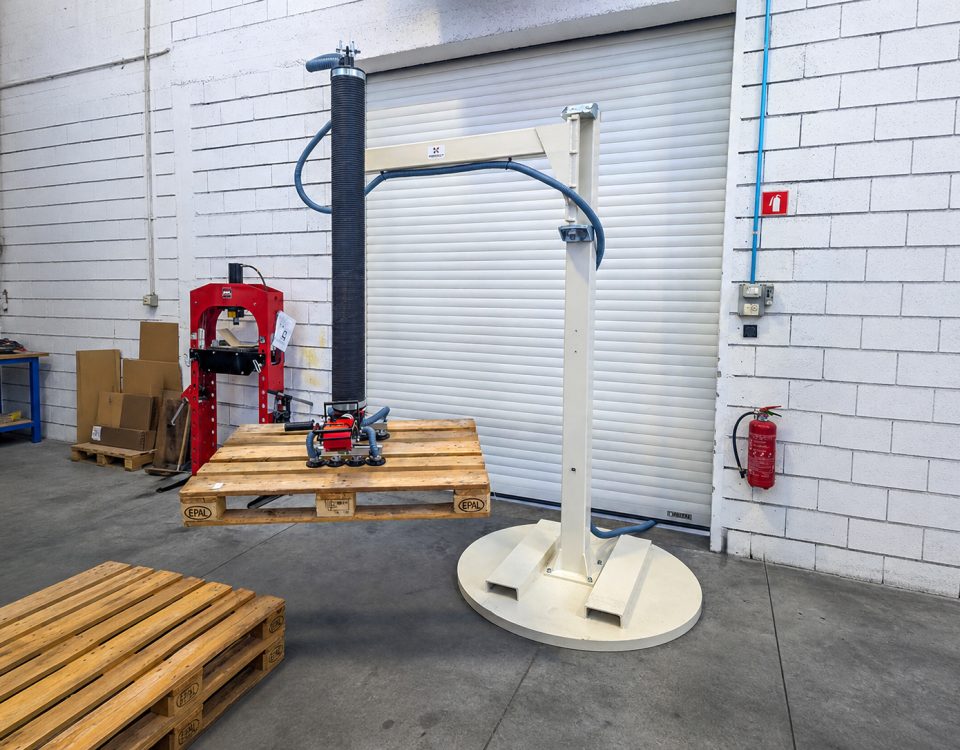
AG055 Tube Lifter – compact, clean and efficient handling for demanding environments.
View AG055 -
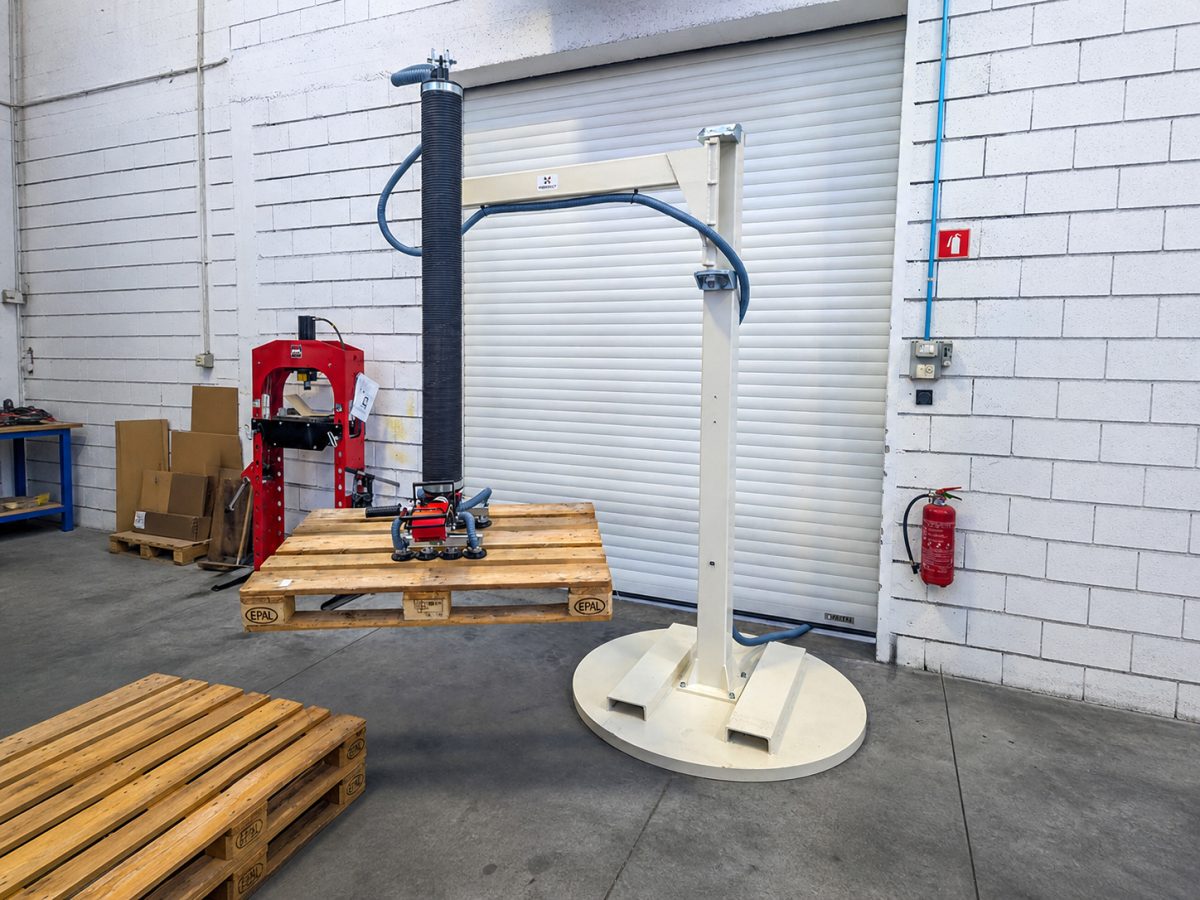
AG057 Tube Lifter – versatile lifting solution for multiple industrial use cases.
View AG057
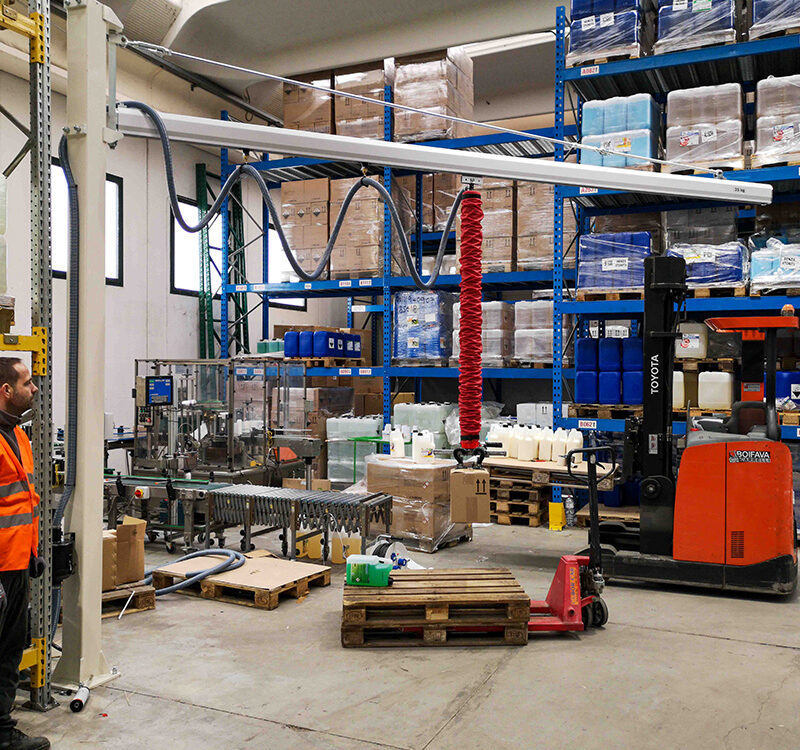
For real-world logistics examples and model highlights, read: Ergonomic vacuum lifters in logistics operations.
CTA: Request a Compliance-Ready Proposal
If you want to improve ergonomics and audit readiness, we can help you configure a CE-compliant tube lifter based on your load type, lifting frequency, headroom, and environment. Explore our full range or contact us for a tailored recommendation:
Contact TubeLifters (Adria Manipulatorji) | Read more technical guides
FAQ: CE Certified Vacuum Tube Lifters
Does CE marking guarantee a vacuum tube lifter is safe?
CE marking indicates the manufacturer declares compliance with applicable EU requirements and has prepared the required documentation. Safety still depends on correct selection, installation, maintenance, and use within the defined application limits.
What documents should I request when buying a CE-certified tube lifter?
Ask for the Declaration of Conformity, user manual, maintenance instructions, and evidence of risk assessment references (e.g., EN ISO 12100). For audits, ensure the documentation is clear, complete, and traceable.
Which standard is most relevant for non-fixed lifting attachments?
EN 13155 is commonly referenced for non-fixed load lifting attachments and is highly relevant to vacuum lifting devices, depending on configuration.
How do porous materials affect vacuum tube lifter selection?
Porous loads often require higher airflow capacity, specialized suction cups, and careful system sizing to maintain stable holding and controlled handling.
Will the new EU Machinery Regulation change CE requirements?
The Machinery Regulation (EU) 2023/1230 will apply from 20 January 2027 and replaces the previous Directive framework for machinery placed on the EU market. Strong documentation and robust risk assessment practices remain essential.
What’s the fastest way to choose the right model?
Start with maximum load weight, load type, surface characteristics, headroom, and lifting frequency. Then match the system (pump sizing + suction tool + mounting) to your real conditions.
Conclusion
Modern EU factories must reduce injuries, improve ergonomics, comply with machinery safety requirements, and boost throughput—often at the same time. A CE certified vacuum tube lifter is one of the most effective ways to achieve these goals with a single investment.
If you handle boxes, bags, wooden boards, porous loads, or sensitive products, CE-compliant tube lifters offer a practical, future-ready upgrade for your production line.
Note: This article is informational and does not constitute legal advice. Always confirm applicable requirements for your specific installation and use case.
TubeLifters by Adria Manipulatorji — Lift Smarter. Work Safer.
Your production line deserves equipment that performs as hard as your people do. With the right vacuum tube lifter, you can make lifting effortless, improve ergonomics, and boost efficiency — all while staying compliant with the latest EU and safety standards.
See Our Tube Lifters in Action
Want to see how our vacuum lifters operate in real industrial environments?
Visit our YouTube channel for demo videos, installations, and expert insights.
Ready to Improve Box and Bag Handling?
Our engineers can review your loads (weight, dimensions, surface) and recommend a vacuum lifting system tailored to your line speed and ceiling height.
Contact the TubeLifters service team for guidance, spare parts, or on-site training.