Vacuum Tube Lifters: The Smart Way to Lift Boxes, Bags and Drums Safely
October 22, 2025
CE-Certified Vacuum Tube Lifters: EU Compliance Guide (2025)
December 21, 2025
How to Choose the Right Vacuum Tube Lifter for Your Production Line
Summary: This practical guide from Adria Manipulatorji, manufacturer of TubeLifters vacuum tube lifters, explains how to choose the right vacuum tube lifter for your production line – from load type and capacity to ergonomics, EU compliance and long-term ROI.
In modern manufacturing and logistics, efficiency and ergonomics are no longer optional — they’re strategic. Every second counts, and every unnecessary manual lift increases the risk of injury or product damage. That’s why more production managers across Europe are investing in vacuum tube lifters: smart, flexible lifting systems that make repetitive handling faster, safer, and more precise.
But with so many models and configurations available, how do you choose the right vacuum tube lifter for your facility? This guide walks you through the key factors, the benefits, and what to look for when selecting the ideal vacuum lifting system for your needs.
Why Vacuum Tube Lifters Are a Game-Changer
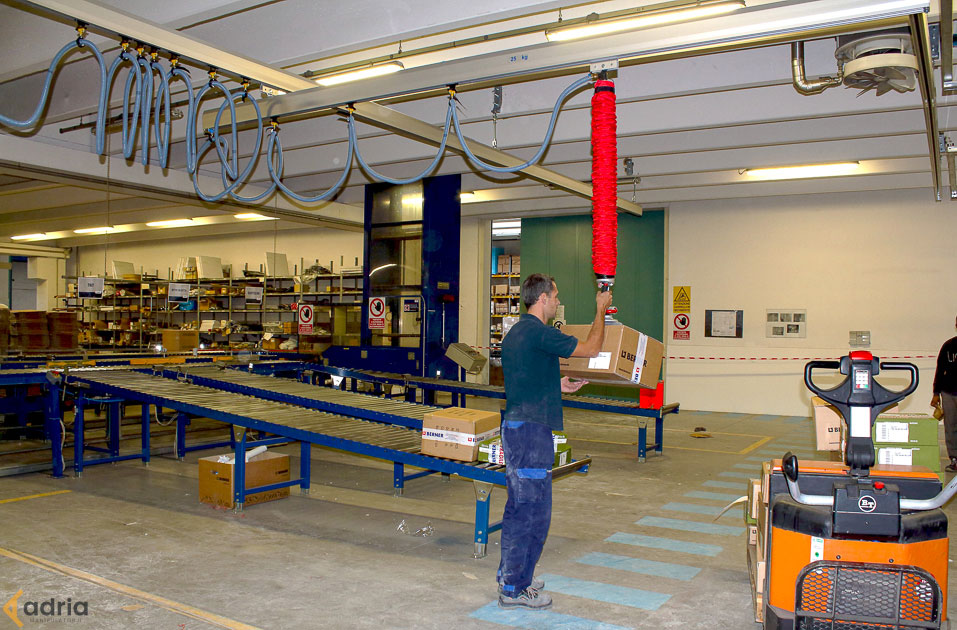
A vacuum tube lifter uses suction power to lift and move objects of various shapes and materials — from cardboard boxes and sacks to metal sheets or fragile panels. Unlike manual lifting or mechanical grabs, these systems rely on vacuum pressure to gently yet firmly hold the object, giving operators full control with minimal physical effort.
For companies looking to increase throughput while maintaining safety, vacuum tube lifters offer three undeniable advantages:
- Improved ergonomics – Reduce strain and injury risk from repetitive lifting and awkward postures.
- Higher productivity – Faster pick-and-place cycles with less operator fatigue.
- Versatility – Handle a wide range of loads, materials, and shapes using different suction heads and configurations.
Many industries — including food processing, warehousing and logistics, furniture production, packaging and automotive — now consider vacuum handling a must-have rather than a luxury, especially where EU ergonomic and safety requirements apply.
Step 1: Define What You Need to Lift
Before comparing models, start with a simple question: What exactly are we lifting? The answer determines the configuration, suction head, tube diameter and vacuum power required.
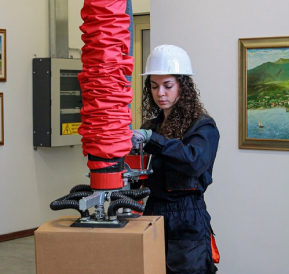
- Boxes and cartons → Standard rectangular suction heads for smooth, flat surfaces.
- Sacks and bags → Special flexible suction cups that adapt to soft, uneven or porous surfaces.
- Drums or cylinders → Custom round vacuum pads or multi-cup configurations for safe grip on curved surfaces.
- Panels, wood, or glass → Large-area suction plates with controlled airflow for porous, coated or fragile materials.
Matching the right suction head to your materials is critical. The wrong configuration can reduce efficiency, increase air consumption or even cause slippage. If you frequently handle different product types, consider a quick-change suction head system so operators can swap cups without tools.
Pro tip from Adria Manipulatorji: When in doubt, send sample products to our engineering team. We test surface, porosity and weight to recommend the safest and most energy-efficient tube lifter configuration.
Step 2: Know Your Load Capacity
Every vacuum tube lifter has a rated lifting capacity — usually between 20 and 250 kg. However, the “maximum” rating is not always what you should design for in daily use.
For safety and performance, select a lifter that comfortably handles around 20–30 % more than your heaviest item. That extra margin ensures stable suction, even if surfaces are slightly porous, dusty or uneven.
Example:
If your heaviest load is 35 kg, choose a model rated around 45–50 kg. This small difference makes your vacuum lifting system more reliable and extends its service life by avoiding operation at the absolute limit.
Step 3: Consider the Working Environment
Not all tube lifters are built for the same conditions. The environment where the machine will operate plays a major role in determining the right model and material selection.
- Food industry or clean environments
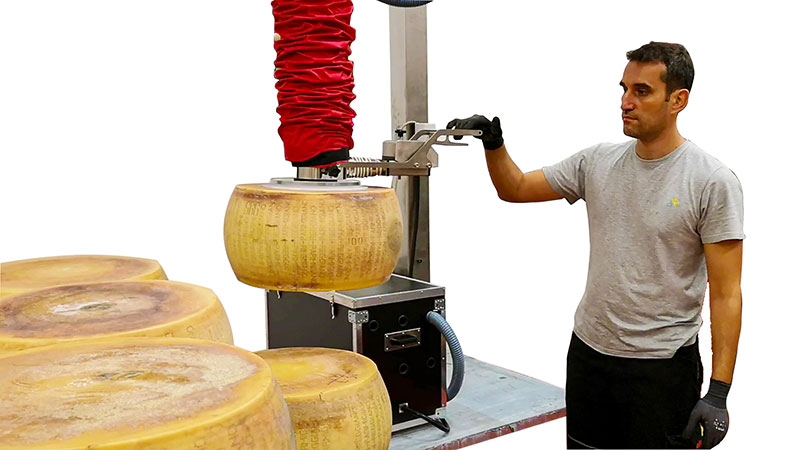
Use stainless steel, food-grade versions that can withstand frequent washdowns. Components should be smooth, easy to clean, and resistant to corrosion or contamination. - Explosive or dusty environments
Look for ATEX-certified models suitable for EX zones and follow all local regulations. - Outdoor or variable-temperature use
Choose systems with reinforced seals, protected hoses and temperature-resistant materials.
If you operate in the EU, always ensure the unit meets all CE and EU Machinery Directive requirements. This is standard practice for Adria Manipulatorji tube lifters and helps you stay compliant and competitive in tenders.
Step 4: Check Headroom and Mounting Options
In facilities with low ceilings or crowded layouts, the available vertical space (“headroom”) can limit your choice of vacuum tube lifter.
Low-headroom tube lifters are designed with a shorter tube or compact control handle, allowing installation where standard cranes or hoists can’t fit.
Typical mounting options include:
- Ceiling or overhead rail systems for fixed stations and long travel distances.
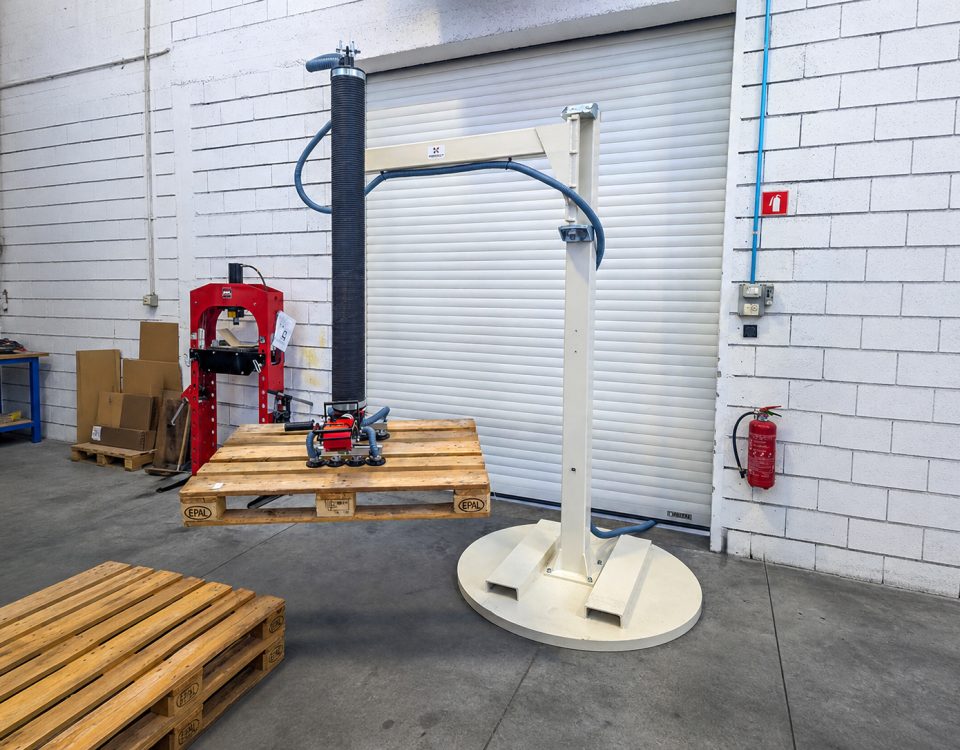
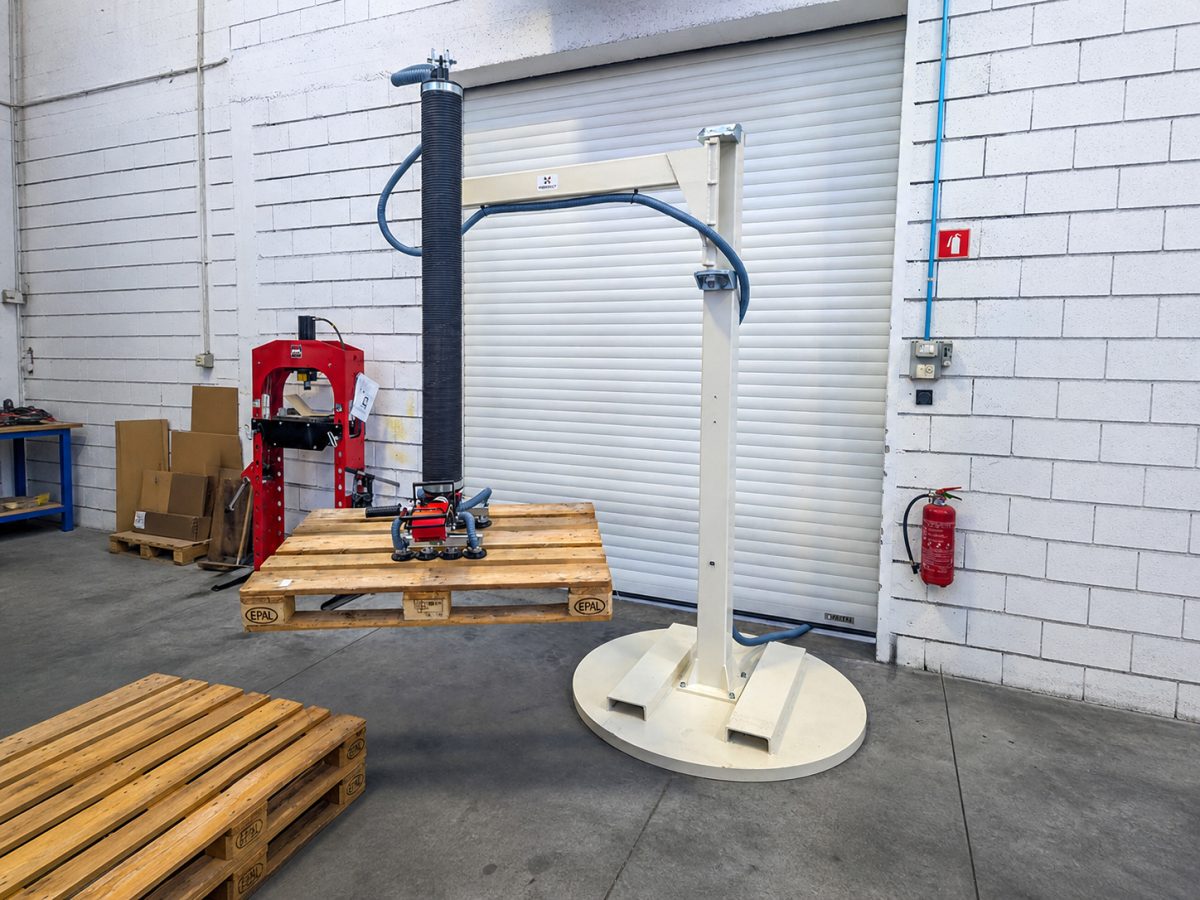
- Jib cranes for flexible, local handling around a single workstation.
- Mobile bases for multiple work zones or temporary setups.
When planning a new installation, consider not just the lifting height but also the operator’s reach and movement radius. A well-planned mounting setup, combined with the right Adria TubeLifters, can easily double the speed of pick-and-place operations.
Step 5: Prioritize Ergonomics and Ease of Use
A vacuum lifter’s true value lies in how intuitive it is for the operator. The best systems require minimal training and can be operated one-handed, even over long shifts.
Modern control handles allow precise lifting, lowering, and releasing — all through natural wrist movements. Adjustable handles fit operators of different heights, while balanced designs prevent awkward postures that lead to musculoskeletal disorders.
Small details like low handle resistance, quick-response valves, and auto-release functions might seem minor, but they make a big difference in daily performance, safety and user satisfaction.
Step 6: Plan for Maintenance, Service and Spare Parts
Even the most reliable vacuum tube lifters need regular inspection. Keeping the system in top condition ensures safety, uptime and long-term ROI.
Key components to check:
- Suction cups: Replace every 6–12 months, depending on wear, material and operating environment.
- Filters and seals: Clean and inspect regularly to maintain vacuum efficiency and protect the pump.
- Vacuum pump or generator: Schedule maintenance according to the manufacturer’s guidelines.
Choose a supplier that offers readily available spare parts — especially suction cups and filters — and provides technical support or training. With Adria Manipulatorji, you get a full service concept: from commissioning and training to preventive maintenance and original spare parts.
A predictable maintenance routine reduces downtime and total cost of ownership over time.
Step 7: Compare Suppliers — Not Just Prices
Price alone rarely tells the full story. When evaluating suppliers for your new vacuum tube lifter, pay attention to these five factors:
- Technical specifications – Does the model truly meet your weight, frequency, surface and safety requirements?
- Certifications – CE, food-grade materials, ATEX/EX where required.
- Local support – Availability of on-site service, training and spare parts in your region.
- Documentation – Clear datasheets, installation manuals, cleaning instructions and risk assessments.
- References and case studies – Real-world success stories that prove reliability in similar applications.
A supplier that provides transparent documentation and personalized consultation is far more valuable than one that only quotes a price.
Step 8: Understand the ROI (Return on Investment)
Investing in a vacuum tube lifter isn’t just about convenience — it’s a measurable improvement in productivity, safety and sustainability.
Consider the following benefits:
- Reduced injury-related absences and insurance costs.
- Faster loading and unloading times, especially in high-frequency tasks.
- Less product damage and rework thanks to controlled handling.
- Improved employee satisfaction and retention due to better ergonomics.
For most operations, the payback period is often under one year, especially where manual lifting currently limits throughput. When you factor in lower maintenance and energy consumption compared to traditional lifting equipment, the return becomes even more significant.
Case Example — From 12 Seconds to 7 Seconds per Lift
One mid-sized packaging company installed a 50 kg vacuum tube lifter to replace manual lifting for carton handling. Before the upgrade, each pick-and-place cycle took about 12 seconds. After installation, the time dropped to 7 seconds — approximately a 40 % speed increase.
Operators reported less fatigue, and the company saw a reduction in strain-related injuries. Within six months, the investment had paid for itself through higher throughput and fewer sick days.
Pro Tips for Long-Term Performance
To keep your tube lifter performing like new, follow these simple best practices:
- Keep the suction cups clean and free of oil, dust or packaging residue.
- Train operators to check vacuum levels and filters at the start of each shift.
- Store spare parts in a dry, dust-free location and use only original components.
- Schedule annual inspections by the manufacturer or an authorized service team.
- Document incidents and near-misses to further optimize layouts and settings.
Related Reading: Deepen Your Knowledge About Tube Lifters
To explore specific topics in more detail, you can also read:
- Ergonomic Vacuum Lifters That Transform Logistics Operations
- Green Logistics: How Tube Lifters Contribute to Sustainable Operations
- 10 Mistakes to Avoid When Using Tube Lifters – Complete Guide
- Tube Lifters in Action: Real-World Case Studies in Heavy Load Handling
The Future of Vacuum Handling
As automation and sustainability drive modern manufacturing, vacuum tube lifters are evolving too.
New designs now feature:
- Smart sensors that monitor suction levels and automatically adjust pressure.
- Energy-efficient pumps that minimize air consumption.
- Modular systems that can integrate with cobots and automated lines.
By combining ergonomics with smart technology, the next generation of vacuum lifting systems will make manual handling faster, cleaner and safer than ever before.
Ready to Find Your Ideal Vacuum Tube Lifter?
Choosing the right vacuum tube lifter starts with understanding your workflow — but it ends with choosing a partner who supports you far beyond installation.
At Adria Manipulatorji (TubeLifters.com), we specialize in tailoring vacuum handling systems for your specific materials, environment and production goals. Whether you work in food processing, logistics, packaging or general manufacturing, our team can help you find the safest and most cost-effective solution.
Get started today:
- Request a free site evaluation or remote assessment of your current lifting tasks.
- Talk to a product specialist about integrating TubeLifters vacuum tube lifters into your existing workflow.
- Ask for references and case studies from your industry.
TubeLifters by Adria Manipulatorji — Lift Smarter. Work Safer.
Your production line deserves equipment that performs as hard as your people do. With the right vacuum tube lifter, you can make lifting effortless, improve ergonomics, and boost efficiency — all while staying compliant with the latest EU and safety standards.
See Our Tube Lifters in Action
Want to see how our vacuum lifters operate in real industrial environments?
Visit our YouTube channel for demo videos, installations, and expert insights.
Ready to Improve Box and Bag Handling?
Our engineers can review your loads (weight, dimensions, surface) and recommend a vacuum lifting system tailored to your line speed and ceiling height.
Contact the TubeLifters service team for guidance, spare parts, or on-site training.